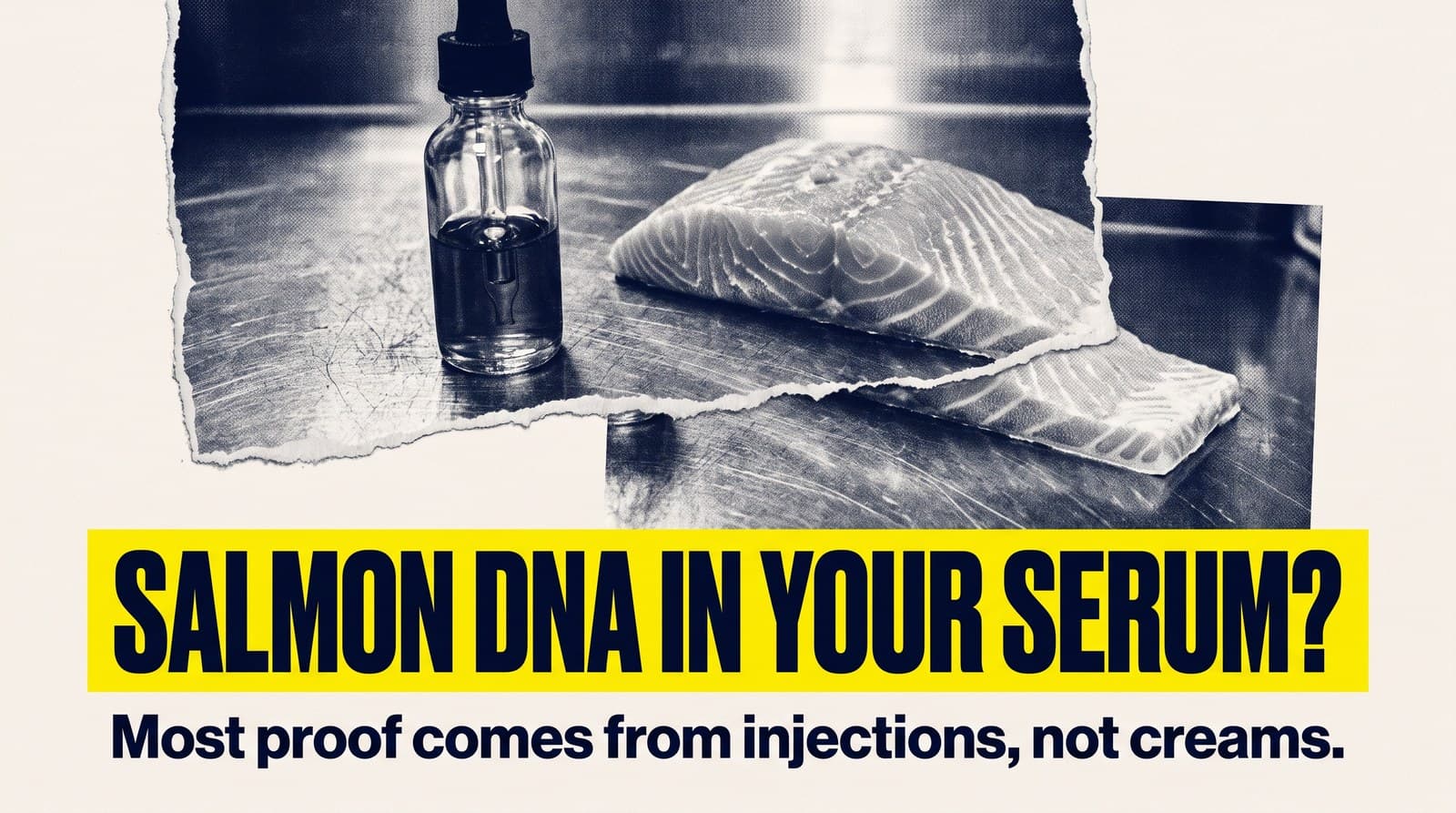
What is PDRN serum, and does salmon DNA do anything for your skin?
TL;DR
- PDRN is short for polydeoxyribonucleotide, a DNA fragment taken from the sperm of salmon trout or chum salmon.
- In lab work it switches on the adenosine A2A receptor, a signal linked to calmer inflammation and tissue repair.
- The clinical products in a 2025 review are injectables, and in South Korea PDRN is approved as a prescription medicine for graft wounds.
- On a serum label it hides as sodium DNA or hydrolyzed DNA, so read the ingredient list, not the front of the box.
Short version: PDRN is a real, studied molecule, but most of the evidence belongs to injections. A serum is a bet on its formula, not a copy of the research.

A PDRN serum is a skincare product built around polydeoxyribonucleotide, short fragments of DNA extracted from fish, most often salmon. Around 15,000 people a month in the US search for it, which tells you how fast the ingredient moved from Korean clinics into ordinary shopping baskets. It also tells you that most of those shoppers are working from marketing copy.
What shoppers actually report
Before the science, it helps to see how real users score these products. Viewduc publishes beauty reviews sorted by skin type, age and concern, and in its dry-skin and acne rankings Anua’s PDRN Hyaluronic Capsule 100 Serum sits at 4.1 out of 5 from 21 reviews at the time of writing. That is a good score on a small sample, and it is a useful frame for the whole category: promising, popular, and far from settled.
Scores like this say something about texture, comfort and whether people would rebuy. They do not say whether the molecule changed anyone’s skin biology, which is a different question and needs a different kind of evidence.
What the research covers, and what it does not
The most recent overview is a 2025 paper, Comparison of Polynucleotide and Polydeoxyribonucleotide in Dermatology, published in Pharmaceutics. It describes PDRN as short, double-stranded DNA fragments sourced mainly from the sperm of Oncorhynchus mykiss (salmon trout) and Oncorhynchus keta (chum salmon). Its main mechanism is activation of the A2A adenosine receptor, plus a recycling route called the nucleotide salvage pathway that lets cells reuse DNA building blocks.
The same review is careful about limits. Its clinical section is built around injectable products, several of them approved in South Korea as prescription drugs for wound healing and tissue repair. Topical PDRN is mentioned as a growing cosmetic category, registered under names such as sodium DNA or hydrolyzed DNA, and the authors say the research on its dermatological effects is limited. They also note that the same compound is classed differently from country to country.
| What the review says | What it means at the shelf |
|---|---|
| PDRN comes from salmon and trout sperm | Check the source if you avoid fish-derived ingredients |
| Clinical use centres on injectable products | A serum is not the same delivery route, so results may differ |
| Cosmetic versions are listed as sodium DNA or hydrolyzed DNA | Search the ingredient list for those names |
| Definitions and purification methods vary between makers | Two products with “PDRN” on the box can differ a lot |
How to read a PDRN serum before you buy
Start with the ingredient list rather than the front label. If you cannot find sodium DNA or hydrolyzed DNA, the product may be using the name as branding. Look for whether the brand states how much PDRN is inside, and be wary of a serum that promises injection-style results from a dropper.
Then look at everything else in the bottle. Most PDRN serums are blended with hyaluronic acid, peptides or niacinamide, and those supporting ingredients are often what you feel on day one. Patch test behind the ear for a few days, especially if your skin is reactive or you already use a strong active. If you use a retinoid, the piece on why retinol burns is a good reminder to add only one new thing at a time.
Expect gentle, cumulative effects over weeks, not overnight change. The most honest way to judge a PDRN serum is to use it for a full cycle of skin renewal, about a month, with the rest of your routine held steady, and then ask whether your skin looks and feels better for the money.
Who is most likely to notice a difference
People with dull, tired-looking skin and no sensitivity are the easiest group to satisfy, mostly because a well-made serum hydrates and plumps the surface within days. If your skin is reactive, or you are managing a condition such as eczema or rosacea, speak to a dermatologist before adding a new active, however gentle the label sounds. Anyone with a fish or shellfish allergy should read the ingredient list closely and ask the brand where its PDRN is sourced.
Price is worth a look too. A serum that costs a fraction of a clinic injection is also delivering a fraction of what a clinic injection does, so the fair comparison is with other hydrating serums, not with a treatment room.
The fair verdict
PDRN is not a gimmick, and it is not magic either. It is a molecule with a credible mechanism and real clinical use in injectable form, now sold in bottles with far less proof behind them. Buy it for the formula you like using, not for a study that tested something else.